Clinical academic careers have long been harder to reach for medical students from under-represented backgrounds. That includes students from lower-income households, ethnic minority communities, neurodivergent students and under-represented genders. Without early research experience, publications and the right networks, many talented students never take the first step into research.
The pressure has grown locally. The University of Dundee’s well-publicised financial shortfall has led to restructuring, job losses and fewer internships and academic opportunities. As a result, clinicians in NHS Tayside have had less research capacity and less university support to build evidence-based practice for local patients.
Without action, the gap between clinicians, academics and patients would only widen, and the next generation of clinical academics would be less diverse.
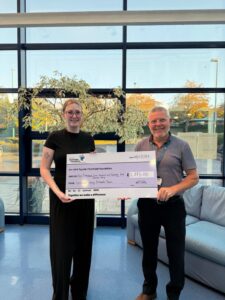
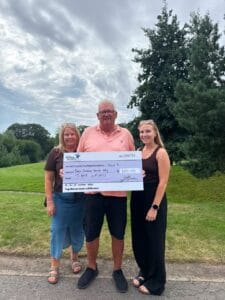
The Beacon Academy brought its internship pilot to NHS Tayside to give students from under-represented backgrounds a route into clinical academic work. With charitable funding, four interns were supported over the academic year.
Key elements of the programme included:
- Protected, Paid Internships: Each intern received a paid, prestigious placement on a research project run by a local clinical academic. Flexible hours fitted around the intern, the supervisor and the project.
- Patient-Focused Research: The four projects covered respiratory function assessment, head and neck cancer, chronic liver disease and surgical rib fixation. These are four very different areas, each with a direct impact on patients in NHS Tayside.
- Tailored Training: Each intern built a training plan with their supervisor. They learned Good Clinical Practice, ethics applications, data collection, patient consent, data analysis and working in a research team.
- Skills Workshops: Extra sessions on writing abstracts and manuscripts led directly to a published journal article.
- Building Momentum Conference: The internships culminated in a research conference at Ninewells Hospital, where each intern was invited to present their work. NHS Tayside academics Dr Chan and Dr Fioratou spoke about their own experiences of coming from under-represented backgrounds.
- Evaluating Impact: The Academy interviewed every intern and supervisor to understand how the internships affect research culture. The findings are being written up for publication.
Restructuring at the university caused delays in releasing funds to the interns, and extra paperwork was added without warning. The Academy plans more regular stakeholder meetings so that problems like these are resolved quickly and don’t affect students.
The team also learned that a gap in expectations between interns and supervisors can strain the relationship. Planned improvements include group meetings, a mid-point stakeholder session and peer mentoring from former interns. They also plan to approach research leads across NHS Tayside so future interns have a wider choice of projects.
Over the pilot year, the Beacon Academy delivered:
- 4 internships completed across four distinct clinical areas
- 1 peer-reviewed publication of original research
- 1 intern preparing to present at an international conference
- 3 of the 4 internships leading to continued research collaborations
- 1 qualitative study of the programme’s impact, now in draft for publication
Students who started with little or no research experience now have academic outputs that will shape their careers. Most interns rated their experience as excellent.
The work is already benefiting patients. One intern’s published study looks at how oscillometry and spirometry can help identify different types of asthma. It could help clinicians personalise treatment for patients with persistent asthma (read the study).
Supervisors said the internships improve patient care, build research capacity and help develop the next generation of clinical academics. Three of the four interns are now part of their research teams and will keep contributing to research for patients in NHS Tayside.
“This has been honestly one of the best opportunities I’ve had during medical school. Not only because of the whole publication manuscript thing, that’s just the result of it, but more because of how much it helped me develop my interest and confidence in being able to sort of vouch for myself. And I know that when I enter future sort of rooms where I need to stand up for myself or seek opportunities, I now have a more sort of solid fundamental base to be able to do that.”
— Beacon Intern, NHS Tayside
Building on the pilot’s success in Dundee, the Beacon Academy is launching the programme at the University of Lincoln. It is also working on a multi-centre research grant with Lincoln and the University of Warwick to fund the internships for several years. The longer-term aim is for the Academy to become a registered charity, supported by university affiliation fees. We are delighted to have supported a programme that is helping to build a fairer, more diverse research workforce, and research that will benefit patients in Tayside and beyond.