

Skin cancer places a growing burden on people across Tayside, particularly among fair-skinned, sun-sensitive populations. Squamous cell carcinoma is one of the most common skin cancers, and prevention relies heavily on treating precancerous skin damage before cancer develops.
The standard preventative treatment, 5-Fluorouracil (5FU) cream, is effective but difficult for patients to tolerate. It must be applied twice daily for four weeks and causes painful skin reactions, making it hard for patients to repeat treatment annually as recommended.
A newer approach combines 5FU with a vitamin D ointment (calcipotriol), reducing treatment time to just 4–6 days and significantly improving tolerability. However, in the UK these treatments are only available as two separate creams, and there was no clear evidence on the safest and most effective way to use them together.
Without this knowledge, a major national clinical trial risked using an ineffective treatment protocol — potentially impacting patient outcomes and wasting significant research investment.
NHS clinicians in Tayside, working alongside academic partners, set out to determine the safest and most effective way to use the combined 5FU-calcipotriol treatment ahead of a major national prevention trial known as the SPOT-IT Trial.
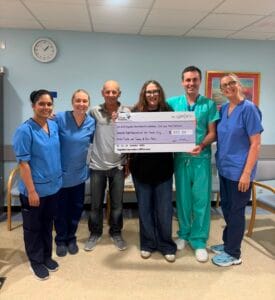
Funding from NHS Tayside Charitable Foundation supported a short but critical laboratory study using a world-leading, animal-free “skin-on-a-chip” model developed at Queen Mary University of London.
This innovative model uses donated human skin from routine surgery to accurately test how medicines penetrate and are metabolised by the skin — something traditional lab models cannot do.
What the Funding Supported
The charitable funding enabled researchers to:
-
Test different application methods for the two creams
-
Measure how well each drug penetrated the skin
-
Identify interactions that could reduce effectiveness
-
Determine a patient-friendly application method that maximises benefit
The research focused on ensuring the treatment would be effective, tolerable, and practical for patients taking part in the upcoming national trial funded by Cancer Research UK.
The study delivered a clear and vital outcome:
-
5FU must be applied first, followed by calcipotriol
-
Waiting just five minutes between applications is sufficient
-
Premixing the creams significantly reduces effectiveness and should not be used
These findings directly shaped the clinical protocol for the SPOT-IT trial and led to immediate changes in dermatology practice across Tayside. Patient information leaflets and local treatment guidelines were updated to reflect the new evidence.
Crucially, this work helped safeguard a £2.2 million national clinical trial from potential failure and ensured patients receive the most effective preventative treatment possible.
Without this project:
-
Patients may have received ineffective treatment advice
-
A major UK-wide trial could have failed
-
Opportunities to prevent future skin cancers may have been lost
Instead, charitable funding helped unlock evidence that will benefit:
-
Patients in Tayside
-
NHS dermatology services across the UK
-
Future skin cancer prevention strategies
The findings will be shared nationally through professional conferences and specialist networks, ensuring long-term impact well beyond the region.
Looking Ahead
This project demonstrates how targeted charitable investment can: Improve patient experience and treatment adherence Strengthen national research programmes Accelerate safe innovation within the NHS The success of this study also highlights the future potential of advanced skin-testing technologies to improve treatments for a wide range of skin conditions. Thanks to NHS Tayside Charitable Foundation supporters, research like this can move from theory to real-world impact — improving care today and preventing illness tomorrow.