

Health inequalities in the NHS reflect wider inequalities in society. While universal healthcare is provided, differences in access, prevention, and outcomes remain, particularly for the economically disadvantaged and underserved populations who can feel judged or overlooked.
For this reason, it is vital that NHS staff understand health inequality from the outset of their training and early careers. Early awareness equips them to approach patients with empathy, to collaborate with other sectors such as housing and education, and to deliver fairer, more effective care.
Consultants in General Practice, Drs Gillian Chin and Trisha Chin, share a passion for design and innovation in healthcare.
Taking a year out during her training to study Medical Education, Trisha focused on health inequality and quickly realised the difficulty of teaching such a complex, sensitive subject online in a way that felt engaging and accessible.
She explained, “After COVID, so much teaching moved online, but health inequality is such an important topic and can feel very abstract to students. It became clear we needed a more interactive, personable way to teach it. I’ve always loved games, so I thought - why not design one? A short, 15-minute activity could spark curiosity, get people thinking about why inequality matters and encourage them to carry those insights forward into their practice.”
Trisha created a tabletop, role-play game. Initial feedback from around 200 medical students and colleagues was overwhelmingly positive, with many suggesting the resource could benefit not only doctors but also nurses, physiotherapists and other healthcare trainees.
However, taking it one step further, the consensus was clear: the game should be further developed, ideally in a digital format that could be shared widely. To take the idea forward, the duo needed funding, and the NHS Tayside Dragons’ Den programme provided just the opportunity.
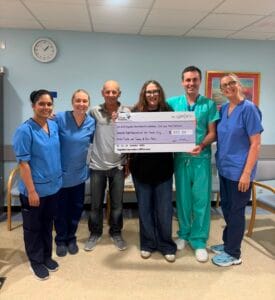
Impressing the Dragons with their pitch, Trisha and Gillian secured more than £21,000 from the NHS Tayside Charitable Foundation to translate their tabletop concept into a digital role-playing game.
Gillian commented, “Here in Dundee, we’re fortunate to have some brilliant game designers, so we got in touch with Abertay University, who are known for creating innovative games with a purpose, games which will have an impact on society. We brought our clinical knowledge and they brought their world-class creativity and technical skills. Together, we co-developed a prototype through design workshops, constantly testing and refining until we had something that worked for all.”
The game features five fictional characters, drawn in a style reminiscent of Beano comics, each facing different social and structural challenges that affect their health. Players take on a character and use tokens to represent energy. As they progress through diffferent scenarios, they must decide how much energy to devote to managing their condition versus other demands in their lives, such as full-time work, childcare or transport difficulties.
Trisha explained, “The game gets learners to step into a patient’s shoes because it’s never just about the illness or the symptoms - it’s about the bigger picture of the patient’s life and their challenges within that. For example, think of someone with Type 2 Diabetes. You might see them every six months and wonder why their progress is slow. Through the game, you experience the competing pressures in their life and gain empathy for the choices they make. It’s not so much about solving inequality, but about sparking reflection and discussion.”